

I’ve always been jealous of people who have complete conviction in their passions, like prodigies or horse girls. To know what you love makes it easier to block out the noise of endless options.
Aside from a few moments of clarity, I’ve never been blessed with the gift of knowing what I wanted to do, and now that I’m 30 years old I’m starting to understand that this is actually not a fault in my personality. Not knowing is okay actually. Being open to not knowing is even better because then you get the gift of having to figure it out.
Unless you have a born calling toward writing, you probably won't fall in love with it until you see someone that embodies being a writer. I think that’s why I love reaching out to people. People help you find your way. One summer, when I was nine I wanted to be a cartoonist because I fell in love with a counselor who taught the cartooning class at camp. He was funny and cool. It was his dream to be published in the New Yorker. Seeing him, so expressive and assured, made me want to do the same.
Sometimes I wonder what my life would’ve been like if I’d committed to drawing when I was nine. Because of Steve, there will always be a version of me that flips around newspapers looking for cartoons, and wondering who drew them.
So when I found Jason Chatfield, I had to reach out.
Jason always knew he wanted to be a cartoonist. He used to carry around a little pen and clip board with paper and draw everything, which is the cutest thing I can imagine.
When he was in eighth grade, his history teacher, Mr. Cook, gave him detention for drawing him in class. “I did a funny caricature of him on my book. It was pretty bad. I mean, it was pretty mean,” he said.
During detention, Mr. Cook told Jason the school gardener was retiring and commissioned him to draw him for $20. “That was the moment something clicked. I was like, alright. Cartooning. This is what I’m going to do.”
Can you imagine a better origin story?
Jason’s work has appeared in The New Yorker, MAD Magazine, Esquire, Variety, The Weekly Humorist, American Bystander, Wired, and Air Mail among others. His art has been exhibited in France, the UK, Australia, and all over the United States and in books published by Penguin Random House, Harper Collins, & Humorist Media. His latest book with Andrews McMeel Publishing was released in Spring 2025, and YEAH, I have a signed copy.
On top of this, Jason is also a standup comedian in NYC. As you can see, he is very successful.
Inside the comedian community he goes by ‘Chatto,’ which is the most Australian nickname ever. Oh yeah, he’s Australian, which feels important to share for some reason. Maybe because reaching out, asking for what you want, things related to networking are very American so Jason’s take on all this is so interesting.
In this interview, Jason details some of the serendipitous connections he’s made to get him to where he is today. This interview is part of a series about how making meaningful connections enhances the lives of the most successful and creative and interesting among us, who have chosen paths less traveled.
I am in bold and Jason is in not bold. Meet Jason Chatfield in his own words:
My first question for you is how do you define a good omen?
In my head, it’s something that portends something good happening down the track. Like, okay, when I was looking for my apartment in New York in 2020, it was a hard time to find a place. Everything was locked down. But I remember when I walked into the lobby of this one building, a little Frenchie ran up to me.
She just ran up and started nipping at my heels, cuddling into me. And I was like, oh wow, this is a good omen. And I ended up living in that place for four and a half years.
So yeah. Little signs that give you that feeling you’re in the right place or going in the right direction.
When you were first starting out—not back in Mr. Cook’s class, but when you were first starting out as a professional—what were some of the most important relationships that made you feel like you were making progress in your career?
I remember it vividly because it was one specific moment.
I left high school. Everyone else went to college. I went straight into working at a printing company. I’d work from 8 a.m. to 6 p.m., then go home and draw all night. Caricatures, editorial cartoons, political cartoons. I’d stay up ‘til 3 a.m., just exhausted. But I didn’t know how to break into the industry. It felt like this locked room.
Then one day, this guy walks in to make color photocopies. I recognized his work immediately. He was a cartoonist for the local newspaper—Greg Smith.
I said, “Oh my god, you’re Smithy!” I told him I was a cartoonist too. He told me I should join the Australian Cartoonists Association. I had no idea what that was, but I went. And you know that feeling when you just find your people? That was it. Everything in my life changed from that moment. From that point on, I really believed I could do this.
Were you nervous to break in? Did you have imposter syndrome?
Major imposter syndrome. I didn’t call myself a cartoonist for the first year. I didn’t feel like I had the experience. But it sunk into my bones, that feeling like “this is my tribe.”
Cartoonists and comedians are wired to see the world through different lenses. You’re always looking for jokes, always asking: “How would I draw this? How would I write this?” We all clicked so quickly. And because there are so few of us, it’s not competitive—it’s just supportive. Same with The New Yorker cartoonists. There are only 16 slots per week in the magazine, but we’re all friends.
I ended up becoming the youngest President of the ACA at 26.
When I moved to the U.S., I joined the National Cartoonists Society, became VP, then served as President for four years. Every opportunity I’ve had came from those organizations. Which is all networking, technically, but it never felt like networking. It felt like friendship.
That's unreal. Do you remember how you got published the first time?
Of course. Michelle Baginsky, a member of the ACA, called me. She said the Fremantle Herald was looking for a cartoonist. She gave me the editor’s email. I sent him a batch of cartoons. An hour later, he replied: “Can you come in today?”
So I went in. He was this big, intimidating, J. Jonah Jameson-type. He sat me down, flipped through my work: “That’s crap. That’s crap. This one’s not bad. That’s crap.” Totally brutal. And I loved it.
He said, “Can you do one a week? We’ll send you the stories, and you do a cartoon.” I said yes.
It was Christmas 2003. I remember sitting in a cafe in Leederville, opening the newspaper, and seeing my cartoon in print for the first time. There’s nothing like it. Every cartoonist will tell you. Your first cartoon in print feels like transcendence. Like immortality.
Why am I crying. That’s so amazing. Does that feeling stay with you, or was it specific to that first time?
It’s diminishing returns. Eventually, you adapt. I got a syndicated comic strip, so I was publishing every day. And it just became stressful. Daily deadlines. You’re constantly sprinting to keep up.
But the only other time I felt that same feeling was when I sold my first New Yorker cartoon. I’d been pitching for six years—every week. Nothing.
Finally, in 2017, I got an email: “We’re taking this one.” And I flipped out. When it ran, I lost my mind. That moment—that was magic.
I know you found most of your network through associations, which is amazing. But did you ever go out of your way to reach out to strangers, or risk rejection? Has anything good ever come from that?
Yes. I read The Art of Asking by Amanda Palmer. That book helped me.
I was really shy. Very self-conscious. In Australia, we don’t really hustle like Americans do. Especially not New Yorkers.
But I realized most of the time, people get things because they ask. That’s the secret. Just asking.
There were two cartoonists I really wanted to reach out to. One of them was Dean Alston, who’d been doing the big daily paper in Western Australia since the ‘80s. My mom was dating this guy whose cousin was married to Dean.
I asked her to ask him to ask her to pass along a message. I wanted to know how he got started.
To my surprise, he invited me to his office. He sat me down and said, “Draw a truck on a street.” So I did a little street drain, truck, a quick sketch. He wanted to see if I had a visual vocabulary. No references. Just the raw articulation of an idea.
Then he said, “You’ve got it. But you need to pull the stick out of your ass and loosen up.” That was his advice.
It was the first time I realized I could ask people for help. That changed everything.
Isn't it amazing how one piece of advice from a stranger can change your life? Like that in itself makes reaching out worth it.
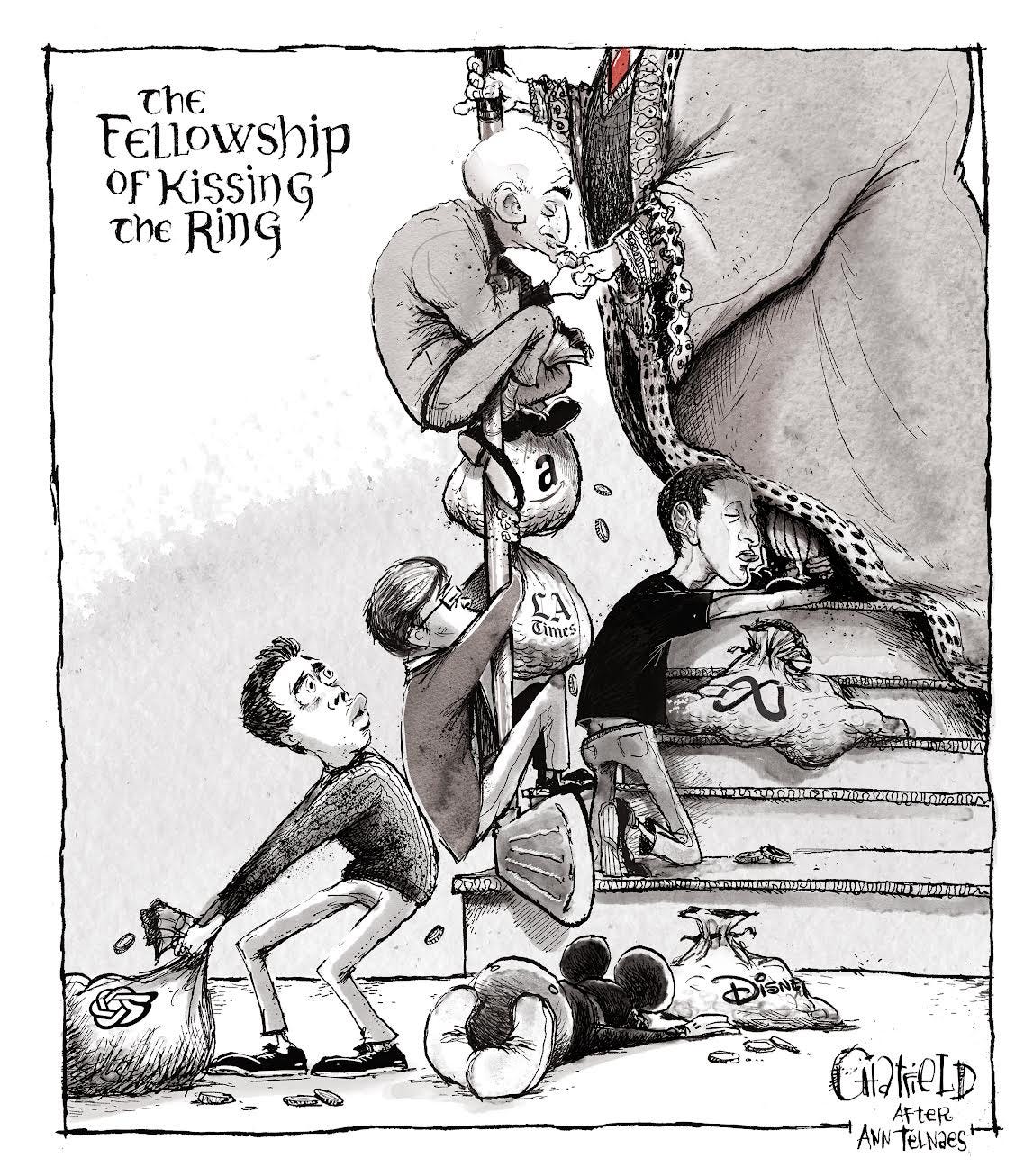
Absolutely. The other big moment was when I reached out to Ann Telnaes. She’s a Pulitzer Prize winning political cartoonist, twice actually, and one of the best in the world. She worked at the Washington Post for 25 years and recently left in protest after Jeff Bezos killed one of her cartoons that was critical of him.
Back in 2005, I found her book Humor’s Edge. I was already working as an editorial cartoonist at a local paper, but I had no idea what I was doing. I was Googling, trying to reverse-engineer how these top cartoonists worked.
I found her book, ordered it, and became obsessed. Her line work, her ideas... I couldn’t figure out how she did what she did. So I emailed her.
I said, “I know you’re busy. You don’t have to reply. I’m a cartoonist in Perth, Western Australia, literally the other side of the world. I just want to know how you do what you do.”
I didn’t hear anything. Months went by.
Then, on my birthday in 2006, I get this five-page email from her. Detailed advice. Tools, brushes, how she scans her work in two parts and stitches it together in Photoshop. Her whole setup. Photos of her kitchen bench, where she works.
It was the most generous thing. And now, she’s a real mentor. We’re still in touch. I’m catching up with her soon while traveling.
She replied on your birthday? That’s a good omen if I’ve ever heard one.
Totally.
That’s one of my favorite things about reaching out, especially now, when everything is so fast and immediate. Real connection still takes time.
Yeah. I was 21. Living with my mom. No idea what my career would look like. And now we’re friends. It’s wild.
Her interview on my Substack is actually my most popular one. I do live interviews twice a week with cartoonists, comedians, artists, and hers just took off. I was so nervous to ask her to do it, but she said yes right away.
That's so amazing. So ok now that you are who you are. You have this network, this career. Do you still find it hard to ask?
Yes. When I was President of the National Cartoonists Society, I had to ask people all the time, but it was on behalf of the organization. It wasn’t me asking. It was “The President” asking. Big difference. If I’m asking on my own behalf it’s still very nerve-wracking.
Crazy how much we catastrophize in our heads, but the worst that can happen is... they don’t respond, which is already happening by default.
Exactly. I used to imagine they’d hate me or judge me. They’d tell their friends I’m annoying. But no. Worst case, they say no. Best case, they say yes.
Okay now here goes the speed round
When you’re “networking,” how can you tell the difference between a real connection vs. surface-level?
But when it’s organic, like when I feel comfortable, curious, open. I feel like I can tell it’s real when I’m able to be myself. And maybe something comes of it, or maybe not. Either way, it’s still worth it.
What’s one thing you love when people reach out to you?
One-line emails. Super concise. Like: “Are you free Monday to sketch for an ad?” Perfect. I can answer yes or no in one second.
What is the most valuable thing you’ve ever learned from rejection?
Oof so much. I actually auditioned for acting school years ago. Made it to the final five. And the head of the school, John Clark, said, “You said in your application that you’re a cartoonist who wants to be an actor. It seems like you’re a cartoonist who wants to be a cartoon.” Brutal. But he was right. And that rejection is what pushed me into stand-up comedy. So yeah. Huge gift.
What’s one weird or surprising habit you have that keeps your creativity flowing?
Ok this is crazy but for over a decade, I had this ritual called “Scotch Bath Sunday.” Every Sunday, I’d pour a glass of scotch, get in the bath with a legal pad, and write cartoon ideas. No phone. No distractions. Just ideas. It was how I reset my brain. Some of my best ideas came from those baths.
That’s fucking awesome I need to do that. What is one thing that you believe to be true that most people think is untrue?
I just finished a book that I’ve been working on for like two years. It's called You’re Not A Real Dog Owner Until. In the process of writing, I did a deep dive on dogs. Their psychology, mechanics, neurochemistry, everything about dogs, and I believe they are smarter than humans. Bear with me.
If you really think about it, they live in the moment every moment. They never stress or worry about the future. They don't live in the past. They are always happy, for the most part. They sleep and rest a bunch.. They love to play. Play is, like, the best thing in the world. They love unconditionally. They're not chasing some hedonic treadmill thing. There's no status thing they're chasing. They're not egotistical.
They live in unadulterated presence. And I'm like, That's the perfect if there's a meaning to life, that's it, right?
Whoa that's gorgeous. Okay, last question. What is your biggest, tactical piece of advice for someone trying to start over or start something, or grow or follow their passions?
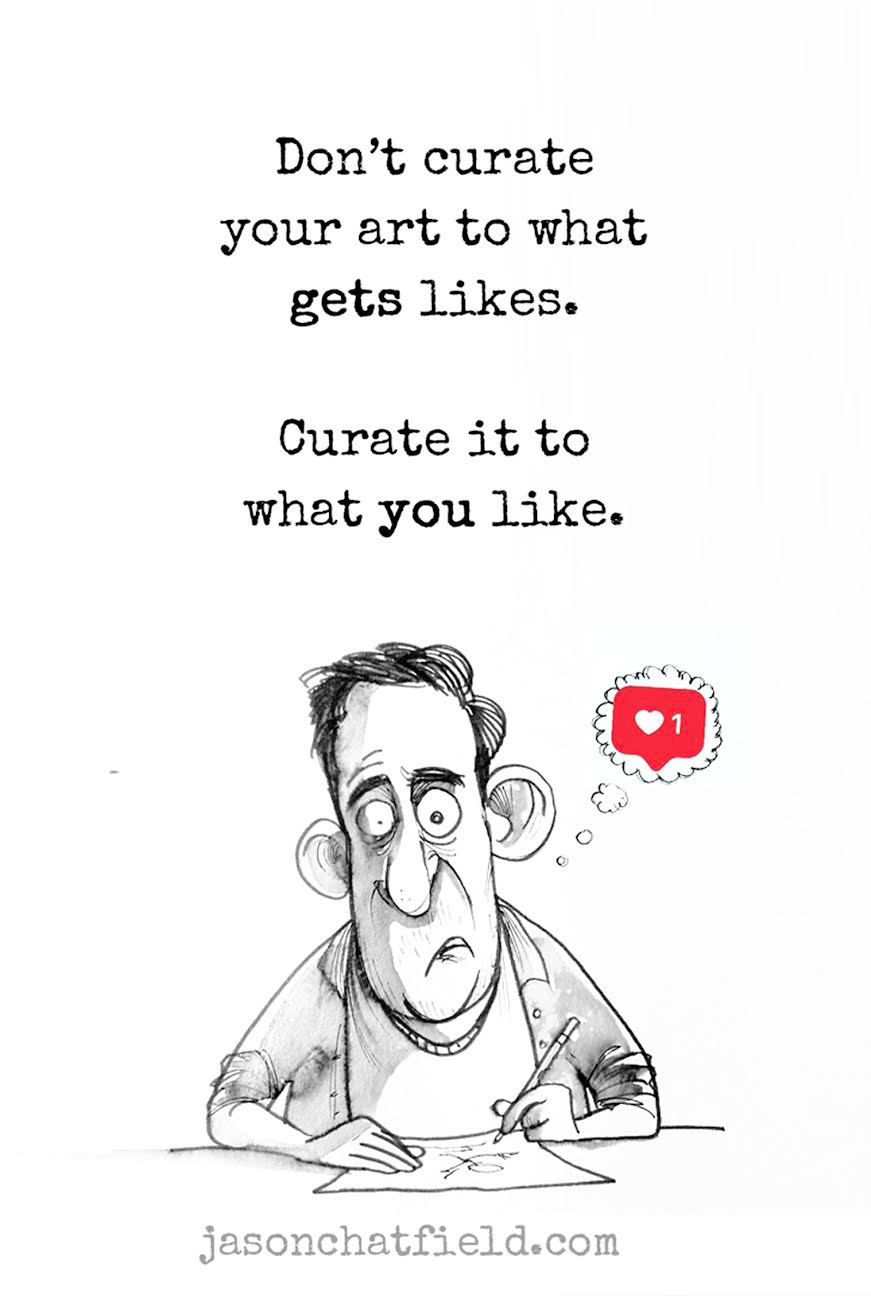
The first one is kind of cliché, which is just don't wait till you're ready. Just start before you're ready, because once you're in motion, it's easier to keep going.
The second is advice that changed my life in my early 20s. I was listening to an interview with John Mayer, of all people, and he was being asked about starting out at Berklee College of Music.
He said, A, learn how to get good at something, and B, learn how to be excellent at something, and C, learn how to be unique at something.
To do that, find the people who are doing the thing that you want to do, and reach out to them, hang out around them. Once you find them, find the status quo. Once you do that, find one thing you’re doing that no one else is and double down on that.
Loved this interview, love his style too, what a great chap. Off to go look at what John said
This is so cool. I just discovered your work via LinkedIn and the 100 DAY CHALLENGE. Not sure why I put that in caps :D Do you do these interviews live and transcribe them? Gah, love this so much as someone who often enjoys reading more than listening. Big hugs and thanks!